Bureau for Coastal Development (BCD)
The Bureau for Coastal Development (BCD) is a Humanitarian Non-Profit Organization working to create a lasting change in the lives of children, families and communities living in poverty and injustice. The Bureau for Coastal Development (BCD) serves all people regardless of religion, caste, race, ethnicity or gender. Being spread all over the eastern area , we work covering a vast area of projects ranging from long-term sustainable community development programs to immediate disaster relief assistance.
Our Aims and Objectives
The Bureau for Coastal Development (BCD) is one of the leading dedicated organisations that involves in many community related projects in the eastern coastal belt.
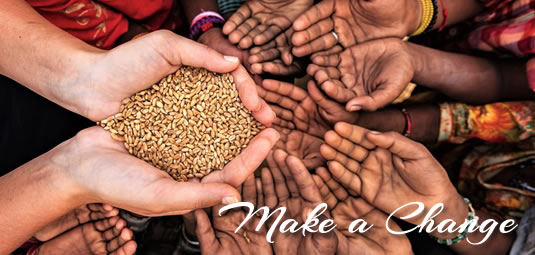
Some of our activities involve Language Education for poor and need children, Technical Skills training, Entrepreneurial support, Manufacture products for local and international markets, Export Orientation, Infrastructure (Road/Irrigation/Drainage/Electricity/Housing/Communication/Medical & Surgical assistance fund, making necessary arrangement to create opportunities for the poor students for the continuation of their higher education and overseas courses.
Our Aims and Objectives could be explained briefly as follows:
To assist the promotion of Peace and Justice; Racial, Religious & Communal Harmony. To promote mutual respect and regard for the beliefs, traditions, rites and practices of all religions and their followers. To co-operate with organisation which have similar objectives. To undertake surveys and researches in socio-economic and cultural fields. To study the issue of break down of values in society and to take corrective measures to stabilize the same through the "BCD". To organize seminars and workshops; publish and distribute periodicals, books and other writing/study materials with a view to archive aforementioned aims and objectives. To issue as and when necessary public statements within the ambit of the above aims and objectives.
Our immediate engagement in relief activities necessary for the people affected by the natural disaster such as Cyclone, Great Flood, Earth Quake, Tsunami, etc. activated for the restoration of the psychologically affected victims.
We (BCD) firmly believe to restore peace and harmony together with its Costal Development venture.
BCD warmly welcomes intellectuals, professionals and skilled personnel to towards shattering obstacles and over coming panic situations faced by the victims of natural disaster.
The Coastal Belt Village history Maruthamunai
The primitive history of Maruthamunai village is entirely different from the history of the Muslim villages in the South - East region of Sri Lanka. The ancestral Muslims of Maruthamunai had settled in Thuraineelavanai village in the Southern boundary of the Batticaloa District, some 6oo years ago. After a lapse of few years of living there, those Muslims mutually replaced the Tamils lived in Maruthamunai.Maruthamunai is bounded on the North by Periyaneelavanai village, on the West by paddy fields together with the river bed of the Batticaloa Lagoon, on the South by another conventional village - Pandiruppu, and on the East by the Bay of Bengal of the Indian Ocean.
Maruthamunai had an extent area of 2.11 square kilometers and a Muslim population of about twenty thousand in 2004. This number is believed to have been decreased into 4/5 portion due to the Indian Ocean tsunami on 2004.12.26 on Sunday.
During the period from 661 A.D. to 750 A.D., there had been a dictatorial rule by “Umaiyahs” in the Arabian sub-continent where the rule was not accepted by the family members of “Hashim” of the Prophet Mohamed (Sal) and this contradiction created constant enmity between two aristocrats.
Meanwhile, when a Umaiyan ruler, Abdul Malik Bin Marwan ascended the throne in 685 A.D., he used to vehemently tortured the “Hashim” members. Being unable to withstand the unbearable cruelty, many Arabian Muslims arrived in countries like Jawa, Malaya, and other far east countries.
Quite a number of such Muslims came to Puttalam and Kalpitiya villages of the North - West coast of Sri Lanka and lived there ever since. There are the Muslims who permanently settled in Sri Lanka. In the latter period of 15th century, some Muslims were deported by the Europeans who governed the coastal regions of Sri Lanka.
These Muslims, finally, sought asylum from the Sinhalese king known as “Senarath” who ruled the rest of Sri Lanka making Kandy, as the city. Thus, those Muslims were colonized in the South East region of Sri Lanka. The ancient lineage of these Muslims became the Muslims of Maruthamunai village, in particular.
Another group of the Muslims, sailing through the Batticaloa Lagoon, settled in a South East bounded village, Thuraineelavanai making conducive existence with a group of Tamils lived there.
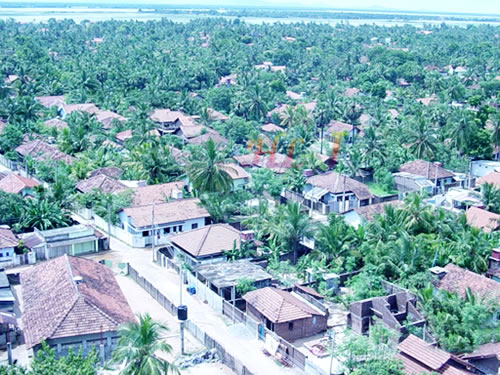
Maruthamunai Village
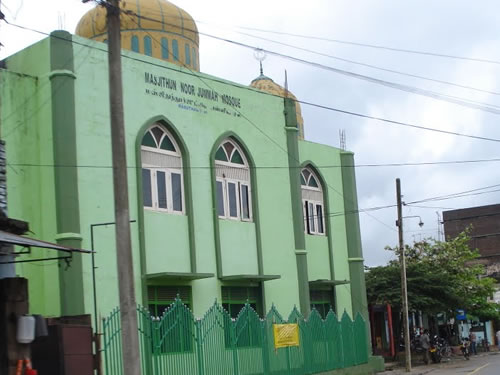
Masjithun Noor Jummah Masjith
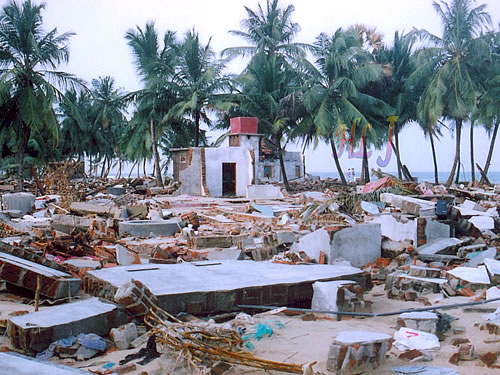
Tsunami Attack
In the late nineteenth century, some people of India called “Seerpalha caste” settled down on their own in the rest of Thuraineelavanai, and so were they in Maruthamunai as well. It is natural to give a name to a new place where migrants wish to live in. Therefore, it is crystal clear that the people of a “Seerpalha caste” had named our village as “Maruthamunai”. The Muslims settled in Thuraineelavanai had been well- killed in Weaving, whereas the people of “Seerpalha caste” were interested in Agriculture.
The two physical environments in their respective villages were adverse to their occupations. This situations paved the way for mutual transfer of the people so that the two villages could inductively engage in their occupations.
Hence the Muslims, who on mutual transfer settled in Maruthamunai village, were headed by the citizens of Jawa, called Aboobucker Ali and his relative; Sermon Mohamed Haji. They made their housings at “Aathi Medu” and “Santhi Manal” areas where the people of “Seerpalha caste” once lived at and also they built a small mosque at “Awakkali yappa palli”, the very spot where the present “Masjithun Noor” mosque is situated and used to follow Islamic doctrines right there onwards.
This ancient Mosque, having been destroyed in 1912, was given new shape into a beautiful mosque of Islamic architectural features in 1926. Considering the dense population existed, this pretty Mosque again was reconstructed commencing on 1977.04.08 in the name of “Masjithun Noor” and ended in 1988. This is the majestic mosque located at Batticaloa, Main Street at Maruthamunai.
A group of Muslims in Maruthamunai North moved to live in Maruthamunai in 1862 and made a small cadjan built Mosque called southern mosque. This too was extended then and there as population grew up. In 1957, reconstruction work began aiming at constructing the mosque permanently, and ended in 1976 bearing its name “Masjithul kabeer”. These two mosques served as the Jummah mosque from there Islamic preaching had been taking place every week on Fridays. Also these mosques have contributed this much in the fields of religious, cultural, educational and peace oriented activities related to the welfare of the people of Maruthamunai.
Then emerged another Jummah Mosque at Akbar Village in the North East of Maruthamunai. This Mosque has been totally damaged by the tsunami disaster on 26th 12. 2004.Instead, however, Jummah sermons take place at Bakiyathus Salihath Mosque, next to Akbar Mosque from 1.5.2005 onwards. And so came another Jumma Mosque called “Masjidul Malharul Magbooliya” in the South East part of Maruthamunai from 2003.10.24 onwards.
Since the people of Maruthamunai had their wedlock most probably within the boundaries of Maruthamunai; this village was thickly populated round the year. Taking this grave problem into consideration, a village of 100 houses named “Akbar Village Housing scheme”, “S. Z. M. Mashoor Moulana Housing Scheme” and “25 house scheme” were established in 1980s. The state lands for these schemes were exploited by the Government in the extreme coastal belt area.
"Bcd" Coastal belt Village history of Maruthamunai.
Conceding the Service to Humanity
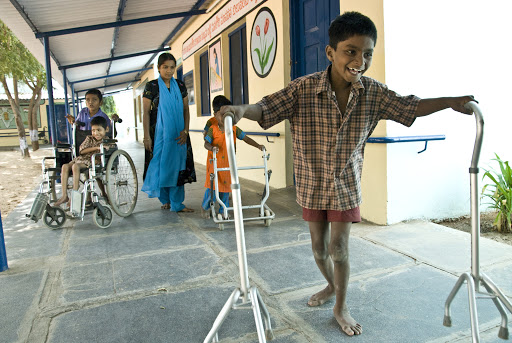
We strive for excellence in our programmes and are committed to updating our perspectives, sharing experiences & knowledge and believe that volunteering has a role to play in this process.
- Assist to the Handicapped.
- Technical Skills training & Entrepreneurial support.
- Children's English Language & Computer Education
- Children's Health Care
- Health care for effected by cancer to the needy children's.